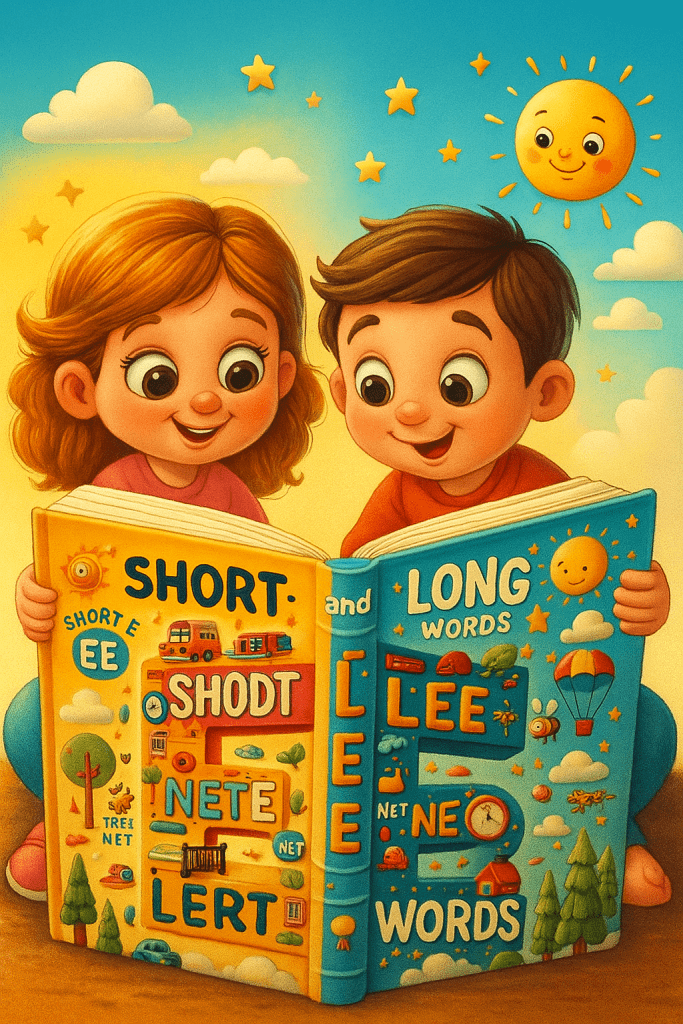
Exploring the Difference Between Short and Long E Sounds
About Exploring the Difference Between Short and Long E Sounds
Exploring the Difference Between Short and Long E Sounds is a phonics practice book about the letter E — the trickiest vowel for many beginning readers. It teaches children to hear, read and spell the difference between short e (bed) and long e (bee, tree, he).
Word lists, sorting games, sentences and short reading passages fill Exploring the Difference Between Short and Long E Sounds, giving children focused practice on this one important sound pair until it becomes easy.
Exploring the Difference Between Short and Long E Sounds
Exploring the Difference Between Short and Long E Sounds helps young readers hear how the letter E changes its sound. Words like ‘bed’ use the short E, while words like ‘bee’ and ‘tree’ use the long E, and telling them apart is a key step in reading new words correctly.
Practise Exploring the Difference Between Short and Long E Sounds by reading the word lists aloud together and sorting words by their E sound. The file is a free PDF on Google Drive, linked from the button below. For the full vowel set, see Smart Phonics Student Book 1.
Use Exploring the Difference Between Short and Long E Sounds when a child mixes up e words in reading or spelling: a few pages of focused practice usually fixes it. The download is linked from the button on this page, ready for class or home.
Mastering E with Exploring the Difference Between Short and Long E Sounds
No vowel causes more confusion than E. Exploring the Difference Between Short and Long E Sounds exists to end that confusion, with a whole book devoted to the two sounds of one letter.
Hearing the Difference
Short e lives in bed, pen and nest; long e sings in bee, tree and these. Exploring the Difference Between Short and Long E Sounds trains children’s ears first with listening and sorting games, because readers can only read a difference they can hear.
Reading the Patterns
Children then learn the spelling patterns behind each sound: e alone, ee, ea, and magic e at the end of words. Word families and sentences in Exploring the Difference Between Short and Long E Sounds show each pattern in action, again and again.
Spelling with Confidence
Dictation and writing tasks close the book, moving children from reading e words to spelling them correctly alone. Teachers keep Exploring the Difference Between Short and Long E Sounds ready as the repair kit for e — small book, big fix. Vowel practice continues in Vowels.
CopyrightsIf this website has shared your copyrighted book or your personal information.
Contact us at [email protected]
to let us know. You will receive an answer within 3 working days.
A big thank you for your understanding