About This Book
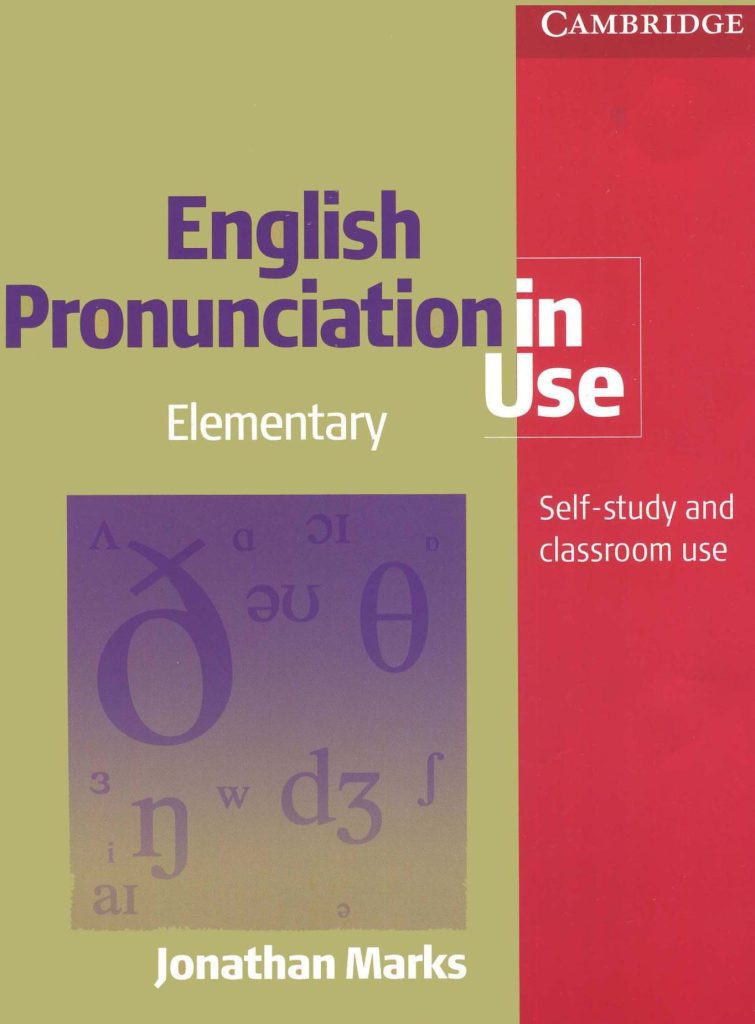
English Pronunciation in Use Elementary is the elementary level of the In Use family’s pronunciation line. The destination heading gives the exact title; the file served there, ‘English Pronunciation in Use Elementary.pdf’, carries the exact title itself — the same volume under the filename the site serves it by. The book’s work is foundations: the individual sounds of English, their contrasts, and the first habits of stress, laid down while laying them down is still easy.
Every teacher of pronunciation knows the asymmetry: an hour of sound work with a beginner is worth a month with an advanced learner, because the beginner’s habits are still wet cement. Yet elementary courses rush past pronunciation to the visible syllabus — words, dialogues, grammar points — and the learner’s inner voice, the one they read with, quietly assigns every English letter the sounds of their own language. Years later that private pronunciation has to be excavated before the real one can be built, and excavation is miserable work. An elementary pronunciation volume exists to prevent the excavation: it gives the beginner the sound system as a first-class citizen of their English from the start — the vowels English has and their language may not, the consonant contrasts that carry meaning, the stress that tells listeners which word arrived. The In Use manner suits beginners exactly: small units, clear models, hear-then-say discipline, everything inside real words. The kindness is structural — nothing here assumes the learner already sounds English; everything assumes they can learn to. Prevention, in pronunciation as in medicine, is the cheapest cure ever sold.
What Learners Will Practise
The Sounds Themselves
Learners practise the individual vowels and consonants of English, especially the ones their first language lacks. A sound that does not exist for the ear cannot be aimed at by the mouth.
Contrasts That Carry Meaning
The book practises the pairs where a sound change is a meaning change — ship and sheep, bad and bed — because those are the errors that actually break communication. Meaning is the argument that makes a beginner care about a millimetre of tongue.
First Word Stress
Readers practise stressing new words correctly from the day they meet them, so vocabulary arrives with its music attached. A word learned with the wrong stress is two words to relearn later.
Key Features
The early timing is the feature: pronunciation before habits set, in the In Use teach-then-practise design. The beginner kindness is the second — no assumed knowledge, everything modelled — and the shelf fit the third, the foundation beside this list’s intermediate volume and its phrasal-verbs gateway. On this shelf it pours foundations straight here.
Who This Book Is For
Beginners are its first audience, building English on straight foundations. Parents and teachers of young starters form its second readership. Returning adults make its third, quietly re-pouring what was poured crooked.
How to Use This Book
Little and aloud, daily — five honest minutes out loud beat an hour of silent looking. Imitate the models shamelessly; mimicry is the method, not an embarrassment. Pair it with every new word you learn elsewhere, checking its stress as you adopt it.
Related Books
The series’ intermediate volume stands at English Pronunciation in Use Intermediate, and the shelf’s phrasal-verbs gateway at English Phrasal Verbs in Use Intermediate Book.